
T.I.P. - Tactical Intelligence Platform

Introducing Shape Intelligence Engine (SIE); the first module of T.I.P.

Understand how teams actually play

Move beyond formations and stats. Understand structure, transitions, and behaviour directly from tracking data.
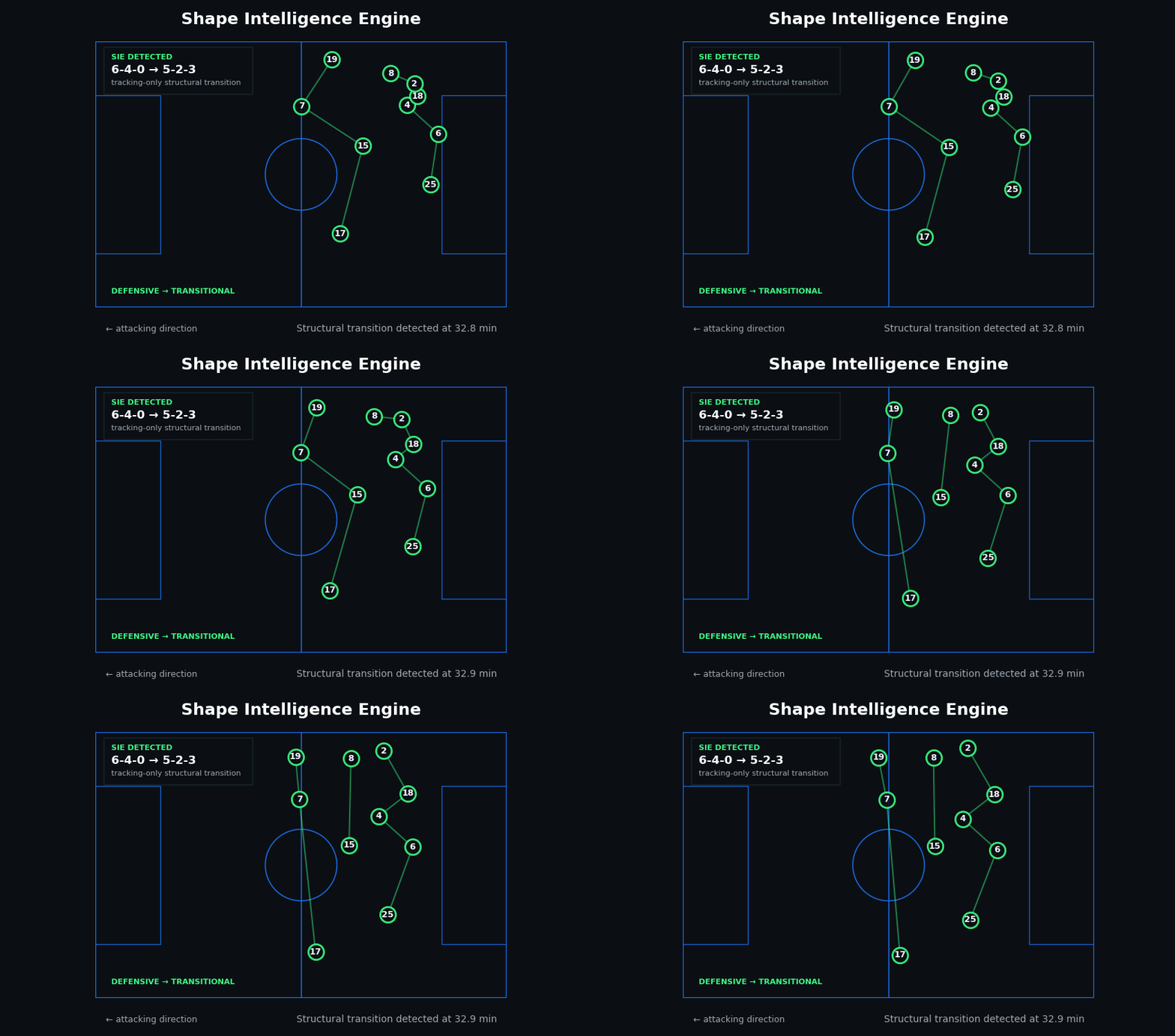
SIE structural transition animation

Shape Intelligence Engine

From tracking data to tactical intelligence

Detect real formations

SIE is the first engine within T.I.P., transforming raw tracking data into interpretable team structure, phases, and transitions.

â–

Structural Shapes

Detect native team structures from tracking data

Identify formations such as 5-3-2, 4-4-2, or 6-4-0 directly from player positioning, without relying on event data or manual tagging.

Phase Intelligence

Identify how teams behave across match phases

Automatically classify attacking, defensive, neutral, and transitional phases based on spatial organisation, revealing when teams stabilise, reorganise, or shift structure during play.

Structural Transitions

Track how team shapes evolve over time

Detect and quantify transitions between structures, such as 5-4-1 to 3-2-5, capturing how teams reorganise during build-up, defensive recovery, or attacking release phases.

Block Behaviour

Measure defensive structure and compactness

Analyse defensive blocks through height, compactness, and stability; identifying whether teams operate in low, mid, or high blocks and how consistently they maintain their defensive organisation.

Visual Intelligence

Built to make structure visible

Phase Profile

Compare attacking, defensive, neutral, and transitional behaviour.
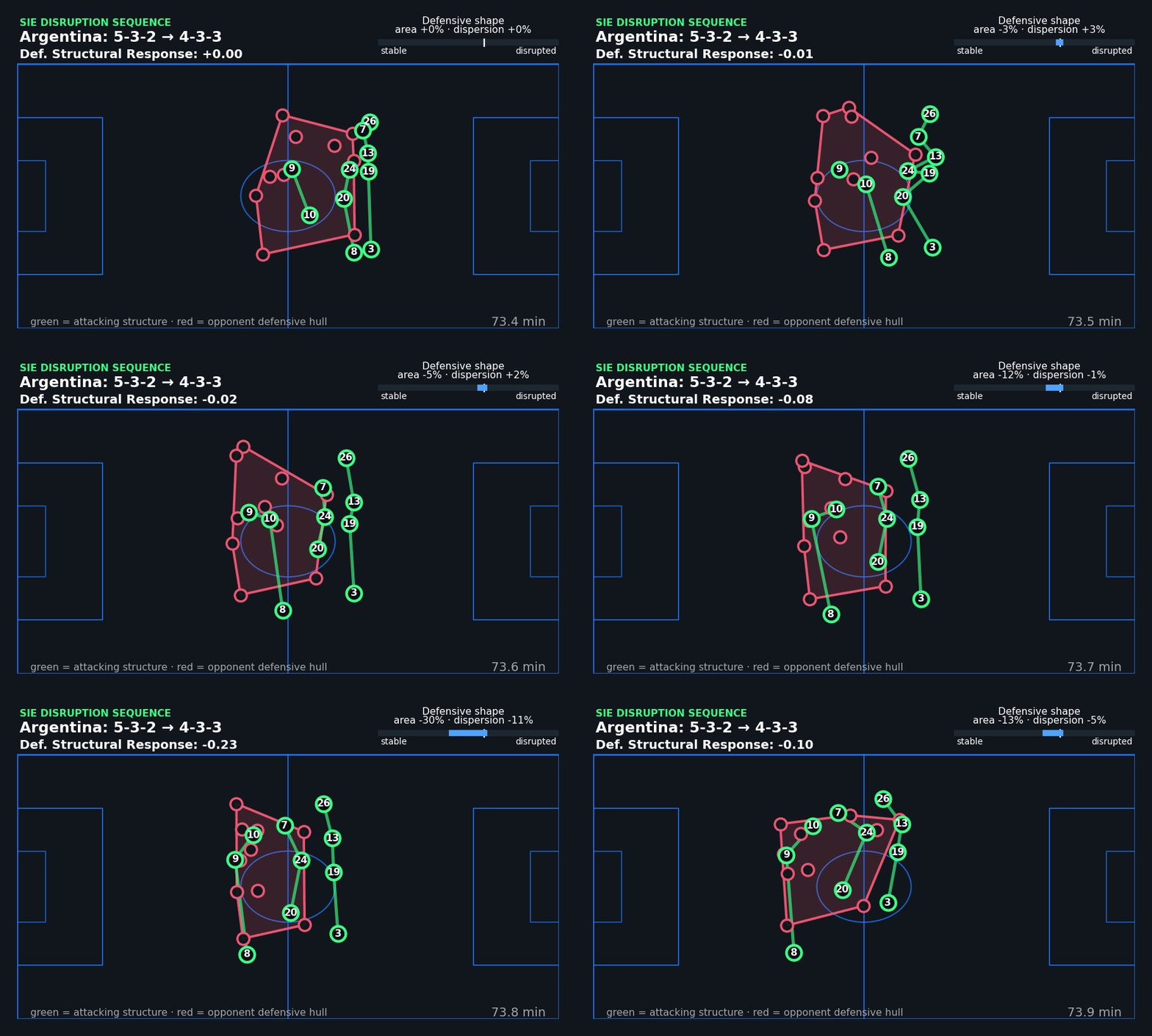
Structural Disruption

Quantify how attacking transitions stretch or stabilise the opponent’s defensive structure in real time.

Team Identity

Combine defensive blocks and attacking structures into one tactical profile.

How it works

Tracking → Shape → Transition → Insight

Tracking Data
Raw player tracking coordinates sampled at high frequency, capturing full team movement without relying on event data.
→
Shape Detection
Outfield players are clustered into structural lines to infer native formations such as 4-4-2 or 5-3-2.
→
Temporal Segmentation
Shape sequences are smoothed and segmented into stable phases to capture tactical behaviour over time.
→
Structural Intelligence
Transitions, phases, and opponent interactions are analysed to quantify tactical structure and disruption.

Launch Access

Explore T.I.P. through Shape Intelligence Engine

See how teams actually play, not just how they line up and T.I.P. turns tracking data into structure, transitions, and tactical insight in real time.

View Sample Analysis